
Why Digital Signage Is Poised to Explode in Kerala & India
Digital signage — screens that display dynamic content (advertisements, information, wayfinding, etc.) — is fast becoming a staple in retail, hospitality, transportation, corporate, and public spaces. In India, and Kerala especially, the potential for growth is significant. This post explores its importance, upcoming demand, and what actors (businesses, government, tech providers) need to know.
What Is Digital Signage & Why It Matters
- Dynamic content delivery: Unlike static posters or boards, digital signage allows real-time updates, animations, video, interactive content.
- Better engagement: Moving images, tailored messaging attract more attention. Use of motion, sound, interaction yields higher dwell time.
- Cost & flexibility: Though upfront costs are higher, over time content changes are cheaper, reduce printing, logistics. Update remotely, schedule content.
- Analytics & targeting: With sensors or cameras, they can track audience, traffic, time of day — enabling more targeted messaging.
Digital Signage in Kerala & Indian Context: Trends & Drivers
- Retail & Shopping Malls
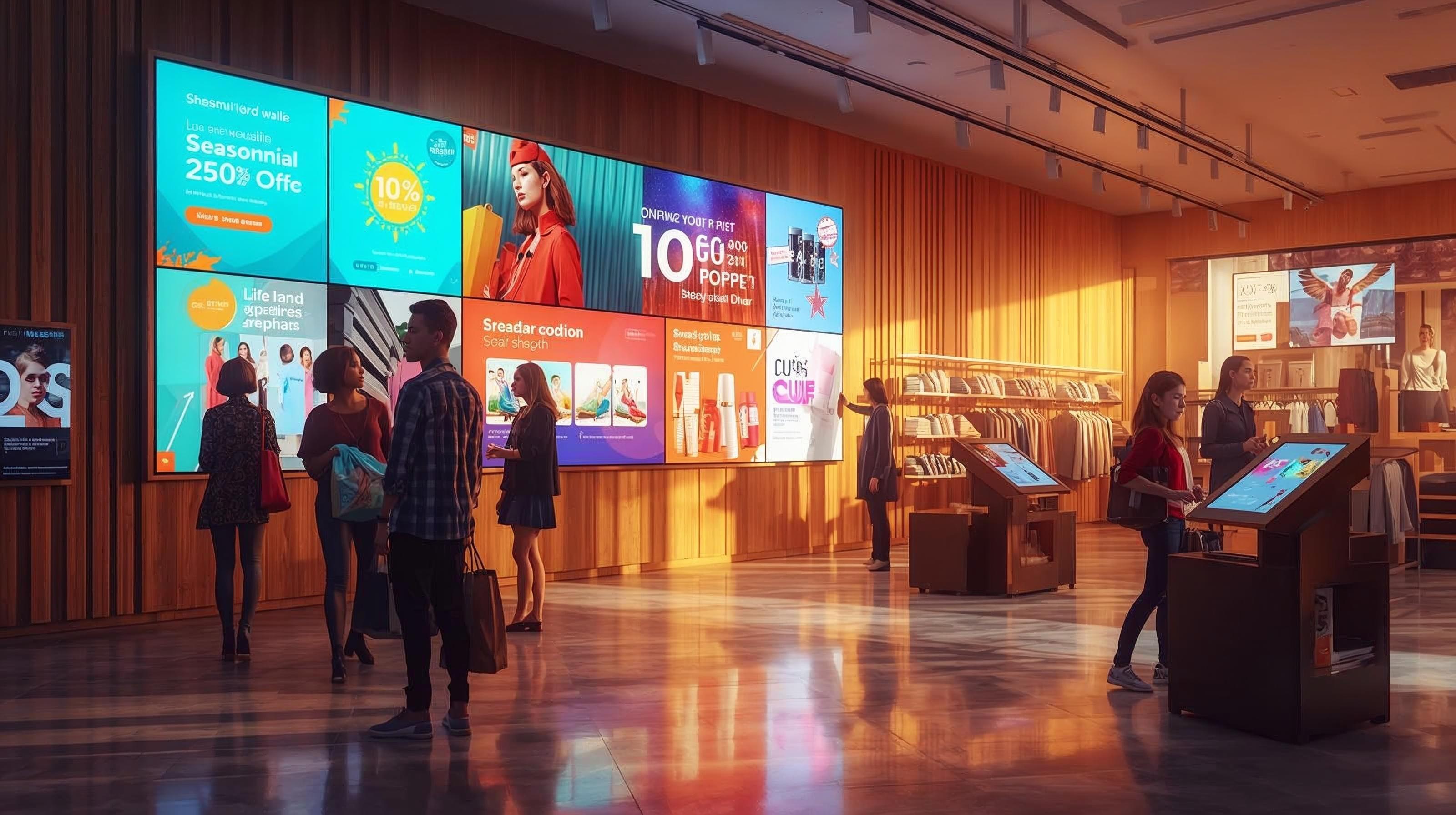
The proliferation of modern shopping malls and high footfall retail zones in cities like Kochi, Thiruvananthapuram, Kozhikode means more demand for in-store promotions, wayfinding, interactive displays.
- Transportation & Public Spaces
Bus stations, airports, railway stations, even public roads – digital signage can be used for info, safety, ads. Government smart city initiatives amplify this trend.
- Corporate & Hospitality Sectors
Hotels, hospitals, large office campuses increasingly use digital signage for branding, wayfinding, internal communication, menu boards, events etc.
- Education, Healthcare & Government
In universities, campuses; in clinics and hospitals; in government buildings – to share health alerts, timetables, notices. Kerala has strong public services where this can make an impact.
- Technological advances
Cheaper, higher resolution displays; energy-efficient LEDs; better connectivity; IoT integration; cloud management; interactive kiosks; AI-based content (e.g. based on time of day or demographics).
Market Potential
- Growing middle class & consumer expectations: Customers expect better visuals, personalized messaging.
- Smart Cities & Government Plans: India’s National Smart Cities Mission, Digital India initiative, pushes for better public information infrastructure.
- Cost of displays & components decreasing: More affordable panels and electronics make deployments more viable, even for smaller towns.
- Regulations & branding pressure: Businesses need to stand out; signage regulations (if favourable) may also allow digital over static in many zones.
Specific Opportunities in Kerala
- Tourism & Cultural Hubs: Places with high tourist traffic (Munnar, Kochi, Alappuzha, etc.) can use digital signage for tourism info, experiential displays.
- Retail expansion in smaller towns: As mall culture and branded stores grow in Tier 2 & 3 towns, demand for signage grows.
- Public sector & local body adoption: Local municipalities, transport authorities in Kerala might use signage for public announcements, disaster alerts, traffic updates.
- Education & Hospitals: Kerala has a good density of institutions; digital signage can improve communication (announcements, event schedules).
Challenges
- Power & maintenance: Reliable power supply, maintenance of screens, weatherproofing (for outdoor signage) are concerns.
- Infrastructure costs: Initial installation, cabling, connectivity, mounting, etc.
- Content management: Need for good content strategy, regular updates. Poor or stale content will kill impact.
- Regulations & approvals: Zoning laws, local body permission for signage, especially outdoors.
What Businesses & Stakeholders Should Do
- Plan for content lifecycle: Not just buy hardware. Plan for content creation, schedule, updates.
- Choose appropriate hardware: Considering durability, outdoor vs indoor, energy consumption.
- Leverage IoT & smart features: Sensors, audience analytics, remote management.
- Collaborate with local providers: For support, installation, upkeep. Local contractors, wiring experts.
- Policy engagement: Work with municipal / local governments to smooth regulatory paths; propose public-private signage projects.
The Road Ahead
Digital signage in India (and Kerala) is on the cusp of expansion. As display technology becomes more affordable, as content becomes smarter, and as consumer & governmental expectations rise, we are likely to see:
- More interactive & immersive signage (AR, touch screens)
- Hybrid signs combining digital and IoT data (weather, transit, crowd flow)
- Local content networks (for smaller towns) managed centrally
- Integration with mobile & app-based interactions
Conclusion
Digital signage is no longer a luxury — it is fast becoming a necessary tool for communication, branding, real-time interaction, and public utility. For Kerala and India, every business, institution or public body should be assessing how they can adopt or scale signage to improve reach, reduce operational costs, and deliver better experiences. The opportunities are large; what’s needed is planning, good execution, and leveraging local strengths.